Công ty cổ phần công nghệ và tư vấn CIC
Specialized
Home > News > Specialized > Construction Robots Work Up to 8 Times Faster Than Manual Labor
Purchasing I-REC Certificates for FDI Enterprises
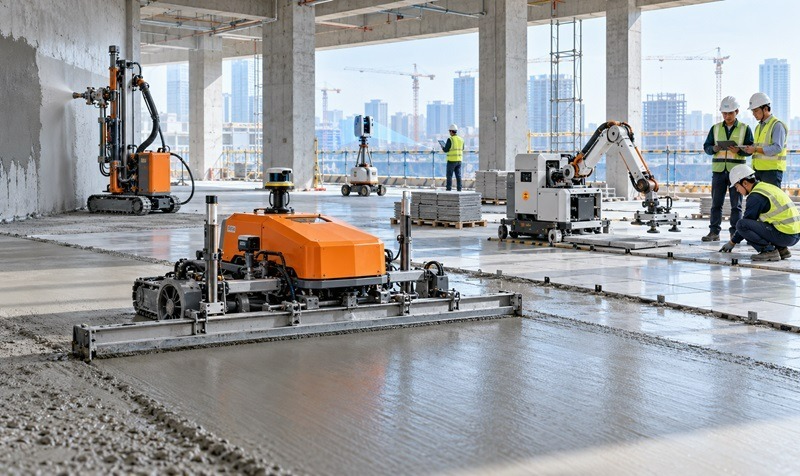
Construction Robots: Automation Solutions for Modern Construction Sites

Construction Robots Work Up to 8 Times Faster Than Manual Labor

Fangshi Construction Robots Meet the Demands of the Japanese Market
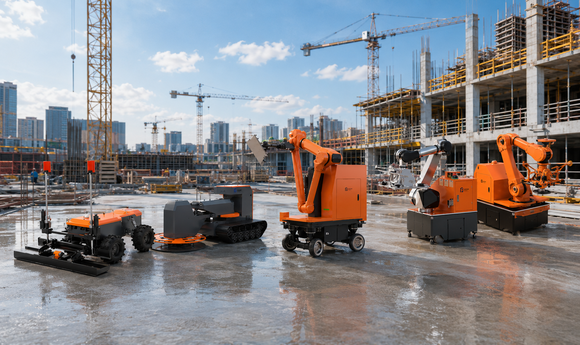
Construction Robots and Their Practical Value for Modern Construction Sites
Nội dung chính
Construction Robots Work Up to 8 Times Faster Than Manual Labor
14/10/2026
Lượt xem 1
Construction robots can work up to eight times faster than manual construction methods in certain tasks and under specific operating conditions. Beyond equipment speed, the more significant advantage lies in completing large volumes of work within shorter periods, maintaining consistent output, and helping contractors manage project schedules more effectively.
When Construction Speed Becomes a Decisive Factor in Project Schedules
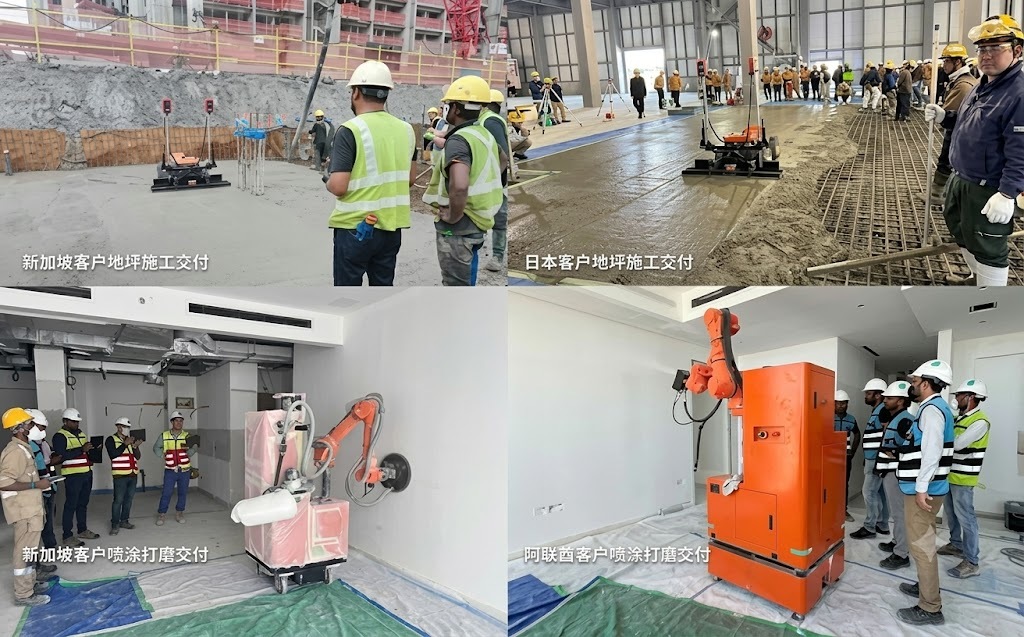
On large construction projects, the time required to complete individual tasks directly affects the overall project schedule. Activities such as concrete leveling, floor troweling, wall putty spraying, and tile installation often involve extensive working areas and repetitive operations across multiple zones.
With traditional manual methods, productivity depends on the number of workers, their skills, physical capabilities, and working conditions. As workloads increase, contractors often need to mobilize additional teams or extend working hours to meet project deadlines. Construction robots offer an alternative approach by using automated equipment to perform repetitive operations, increasing the amount of work completed within a given period.
What Does Working Up to 8 Times Faster Mean for Construction Productivity?
For contractors, substantial differences in productivity can bring several important changes:
-
Faster completion of work: Shorten the time required to complete large-area construction tasks.
-
Higher output per shift: Make better use of available working hours when sites and materials are properly prepared.
-
Reduced labor mobilization pressure: Limit the need to increase the number of direct workers in proportion to project workloads.
-
Faster handover between construction teams: Enable subsequent teams to begin their activities earlier.
However, higher equipment productivity does not mean that the entire construction schedule will be shortened by the same proportion.
Construction sites still require time for preparation, material transportation, equipment operation, and quality inspections.
Increasing Construction Output Across Large Areas
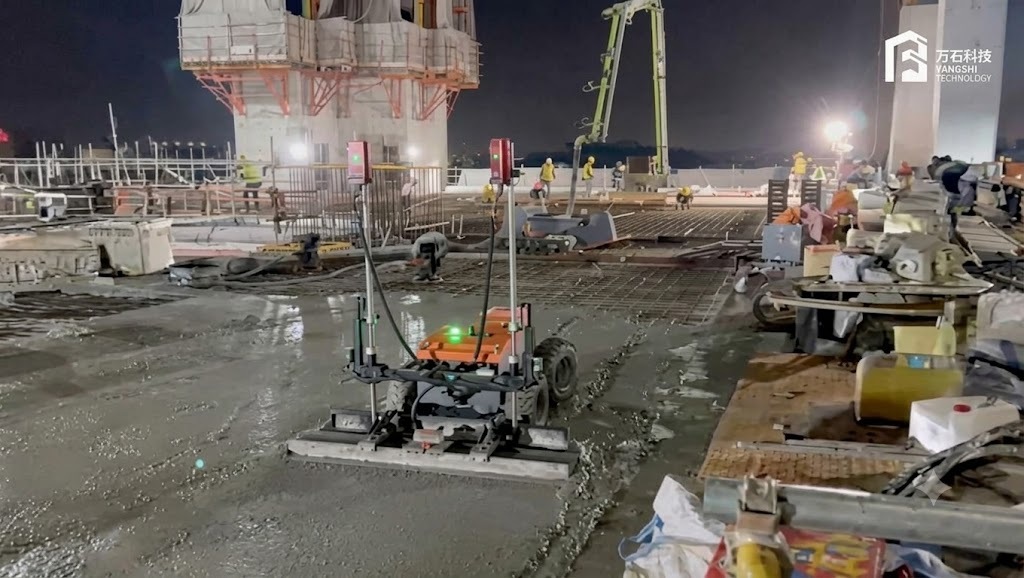
One of the most significant advantages of construction robots is their ability to continuously perform predefined operations, particularly in areas with relatively uniform working conditions.
For factory floors, logistics warehouses, and large concrete surfaces, robotic leveling and floor finishing equipment can process substantial workloads in relatively short periods.
According to reference specifications published by manufacturers, certain concrete floor finishing robots distributed by CIC can achieve productivity of approximately 400–600 m² per hour under suitable conditions.
In residential and commercial buildings, robots designed for putty spraying, sanding, and tile installation can also accelerate repetitive finishing tasks across multiple floors and construction zones.
These applications share a common benefit: transforming construction methods that depend heavily on manual operations into workflows with more clearly organized and measurable output.
Maintaining Consistent Productivity Throughout Construction
Improving productivity involves more than achieving maximum operating speed at a particular moment.
For projects lasting several weeks or months, maintaining planned output is equally important.
In manual construction, productivity may vary between shifts due to staffing changes, weather conditions, site complexity, and breaks between operations.
Construction robots perform tasks according to established procedures, helping maintain more consistent output across similar working areas.
As a result, contractors can manage several activities more proactively:
-
Planning daily or shift-based production targets.
-
Allocating workers and materials according to construction schedules.
-
Monitoring completed work quantities in individual construction zones.
-
Adjusting construction plans when delays occur.
These advantages are particularly valuable for projects involving multiple similar finishing tasks, continuous construction schedules, and strict handover deadlines.
Higher Productivity Helps Reduce Waiting Time Between Construction Tasks
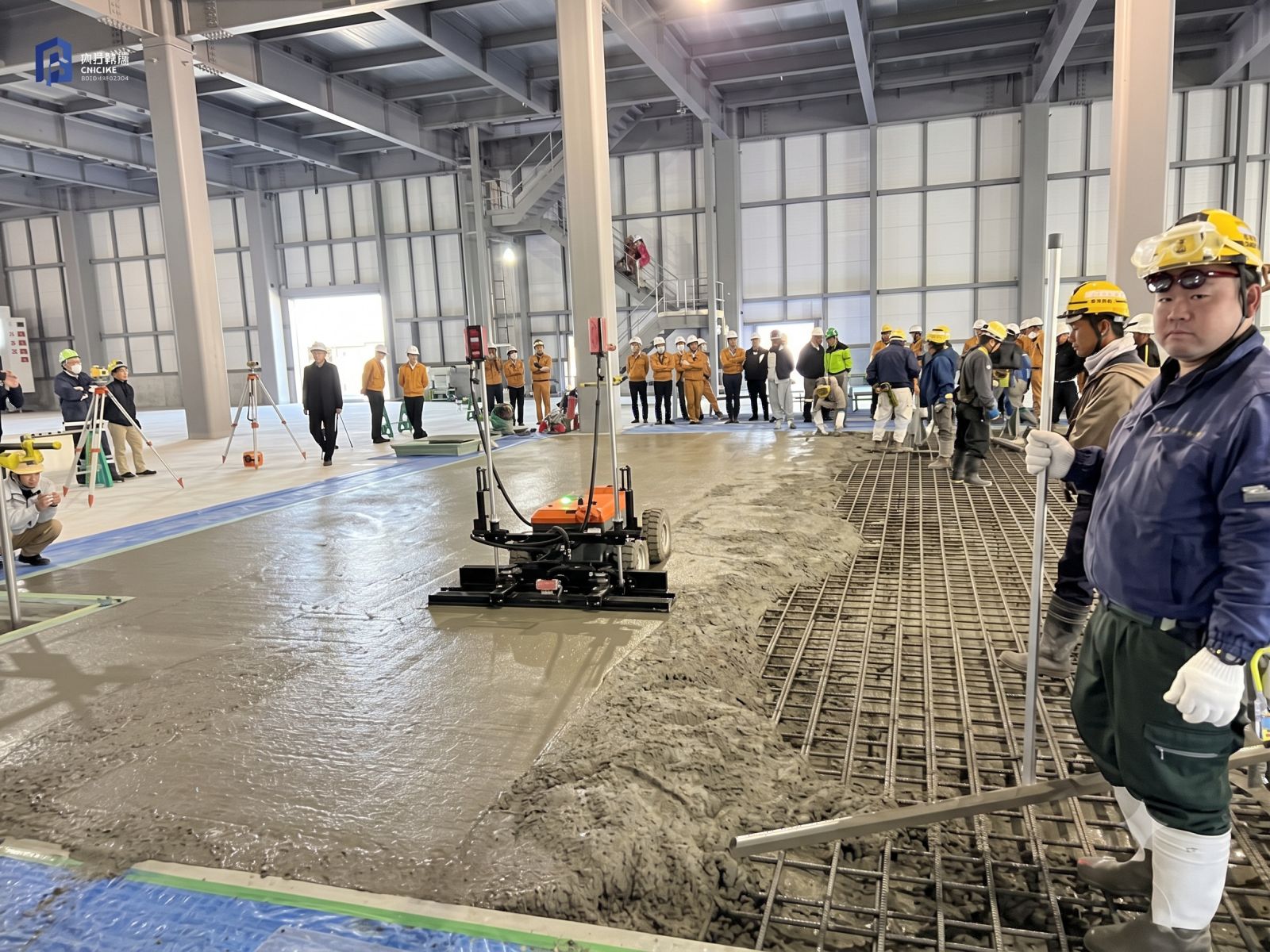
Delays in one construction activity can affect several subsequent operations.
For example, when floor finishing takes longer than expected, teams responsible for equipment installation, interior finishing, or other activities may have to wait before accessing the work area.
Applying robots to suitable tasks gives contractors an opportunity to shorten the time required to complete individual construction zones, improving coordination between teams.
The benefits extend beyond the operating hours saved by a single machine.
They also include reduced waiting time and better continuity across the entire project.
This factor should be considered when evaluating robotic applications on sites involving multiple subcontractors and construction activities taking place simultaneously.
Evaluating Construction Robot Performance Through Actual Results
To determine whether robots deliver better performance than existing construction methods, contractors should evaluate them under real project conditions.
Four key indicators should be considered:
|
Performance Indicator |
Purpose |
|
Construction output (m²/hour or m²/shift) |
Evaluate the rate of work completion |
|
Total task completion time |
Determine potential schedule reductions |
|
Number of direct workers |
Assess labor allocation efficiency |
|
Construction cost per m² |
Determine actual economic efficiency |
Additional factors include equipment setup time, material supply, movement between work areas, and the handling of locations unsuitable for robotic operations.
Robots are more likely to achieve strong productivity advantages on projects with large construction areas, favorable site conditions, and continuous workloads.
Conversely, performance may fall below reference levels in small spaces, areas with numerous obstacles, or locations requiring frequent changes to construction methods.
Construction Robots: From Equipment Speed to Overall Site Efficiency

The ability to perform certain tasks several times faster than manual methods demonstrates the potential of robotics to transform construction productivity.
However, the greatest benefits can only be achieved when equipment is assigned to appropriate tasks and integrated into an effective site management strategy.
For contractors managing large workloads, construction robots represent a practical solution worth considering to increase output, shorten completion times, and improve construction efficiency.
CIC Provides Construction Robotics Solutions to Improve Productivity
CIC Construction Technology and Consultancy Joint Stock Company provides construction robotics solutions for concrete floor finishing, putty spraying, wall sanding, tile installation, and other automated construction applications.
Businesses can discuss their construction activities, working areas, target productivity, and site conditions with the CIC team to receive recommendations on suitable solutions.
CIC Construction Technology and Consultancy Joint Stock Company
- Hotline: 036 575 6854
- Email: info@cic.com.vn