Công ty cổ phần công nghệ và tư vấn CIC
Specialized
Home > News > Specialized > Construction Robots: Automation Solutions for Modern Construction Sites
Purchasing I-REC Certificates for FDI Enterprises
Construction Robots: Automation Solutions for Modern Construction Sites

Construction Robots Work Up to 8 Times Faster Than Manual Labor

Fangshi Construction Robots Meet the Demands of the Japanese Market
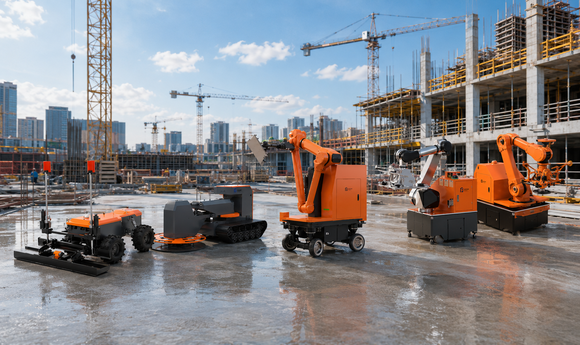
Construction Robots and Their Practical Value for Modern Construction Sites
Nội dung chính
Construction Robots: Automation Solutions for Modern Construction Sites
27/10/2026
Lượt xem 1
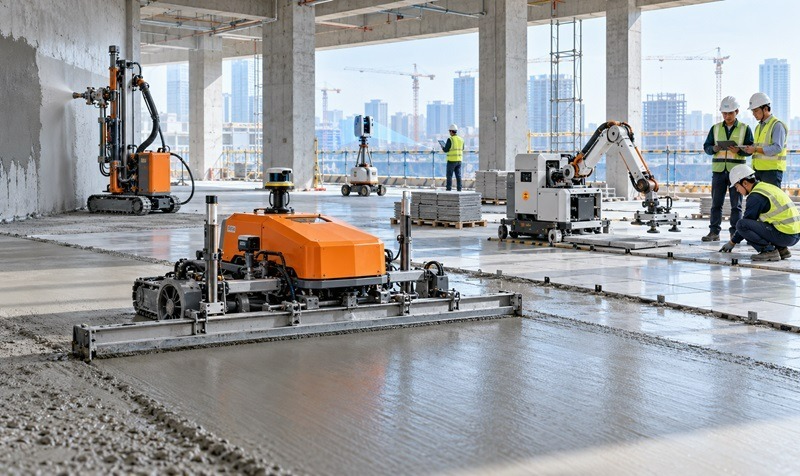
Construction robots are increasingly being deployed for high-volume, repetitive tasks that require consistent quality. Solutions for floor construction, tile installation, wall finishing, and on-site measurement help contractors manage project schedules, reduce workforce pressures, and standardize construction quality.
For developers, general contractors, and finishing contractors, the key considerations extend beyond what robots can do. They also include which projects are suitable for automation, what conditions must be prepared, and how return on investment should be evaluated. Starting with a specific construction task and conducting trials under actual site conditions allows businesses to assess feasibility before scaling up deployment.

How Are Construction Robots Transforming Construction Operations?
Construction robots are automated or semi-automated machines developed to perform specific tasks on construction sites. These systems may integrate sensors, cameras, positioning technology, automated controls, and software to carry out operations according to predefined parameters.
The applications of robotics in construction continue to expand, ranging structural construction and building finishing to infrastructure measurement, inspection, and maintenance.
Construction tasks that can benefit robotics and automated equipment include:
-
Mortar screeding, concrete leveling, and floor troweling.
-
Floor tile installation.
-
Wall painting, putty spraying, sanding, and finishing.
-
Wall plastering and masonry construction.
-
Rebar tying on floor slabs.
-
On-site measurement, surveying, and quality inspection.
-
Underwater structural inspection.
-
Underground sewer cleaning and maintenance.
Automating these processes enables construction companies to move away methods that rely heavily on individual experience toward standardized workflows with configurable parameters, measurable results, and repeatable operations across multiple construction areas.
Key Categories of Construction Robots in 2026
Concrete Floor Construction and Finishing Robots
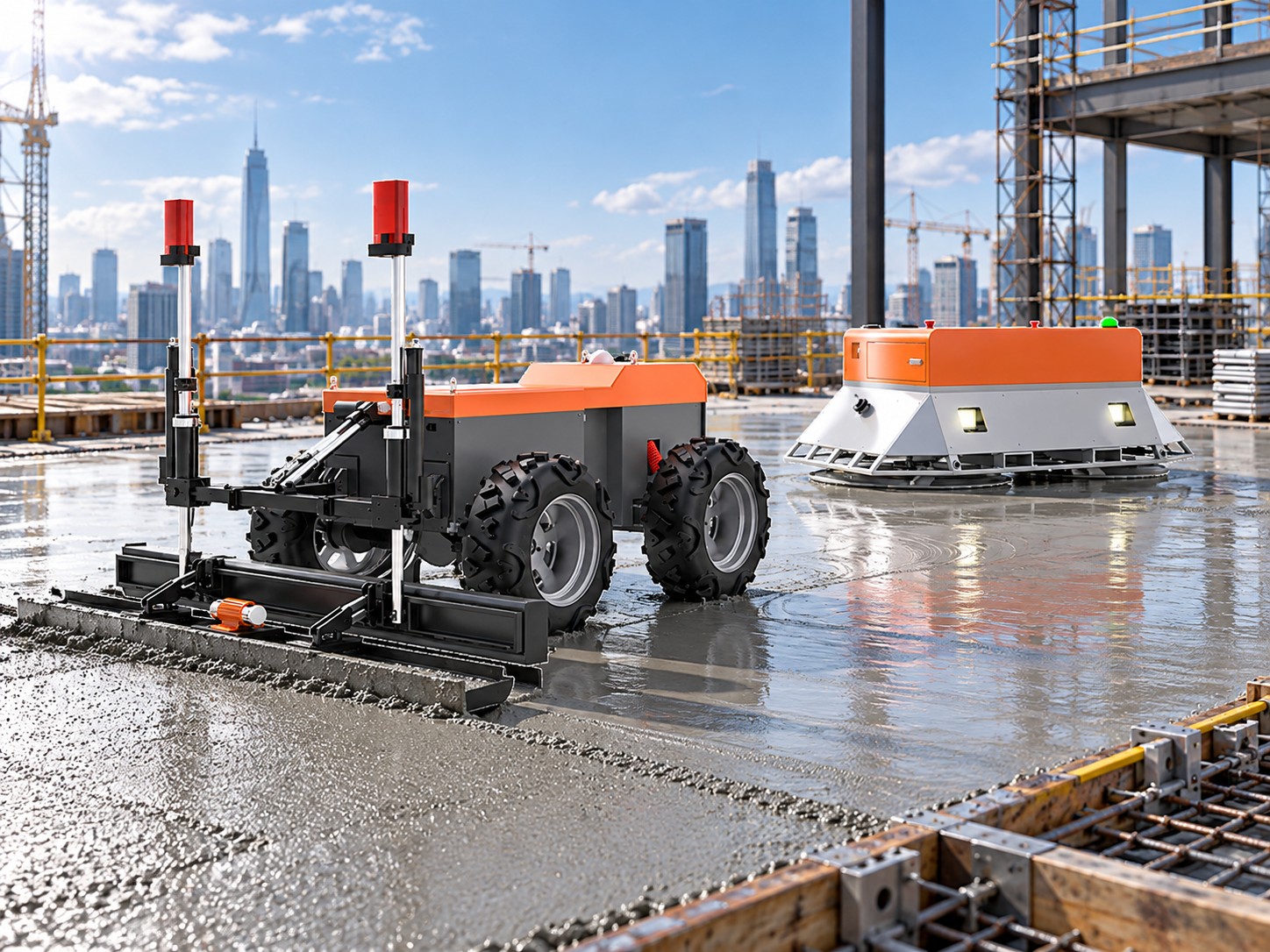
Floor construction is one of the activities that requires fast execution, extensive working areas, and continuous quality control. Differences in workers\' skills or site conditions can affect surface flatness and finishing quality.
Robotic mortar screeding, concrete leveling, and floor troweling equipment can perform operations according to predefined parameters. These solutions are suitable for high-rise buildings, factories, logistics centers, parking facilities, commercial buildings, and projects with large floor areas.
Their value lies not only in operating speed but also in maintaining consistent quality across construction zones, minimizing rework, and reducing pressure on on-site teams.
Robotic Floor Tile Installation
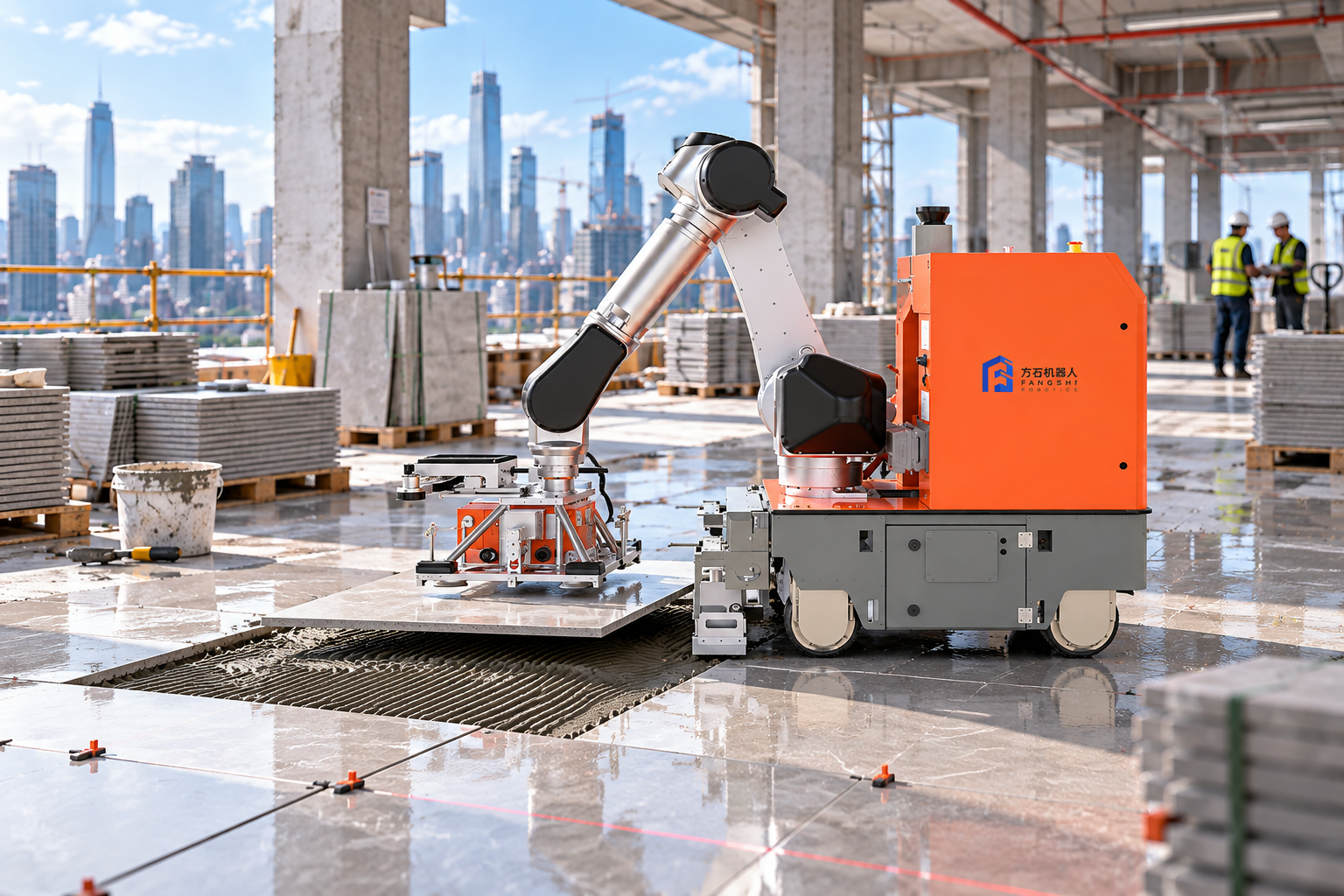
Tile installation involves continuously repeated operations requiring precise positioning and consistent quality over large areas.
Tile-laying robots can combine robotic arms, sensors, and autonomous mobility systems to assist with picking up tiles, applying adhesive, placing tiles, and adjusting their positions.
These solutions are suitable for projects with relatively uniform tile dimensions and installation requirements, including shopping centers, hotels, apartment buildings, hospitals, schools, and public facilities.
Robots help construction teams reduce manual operations while improving installation accuracy and progress control.
Wall Finishing Robots
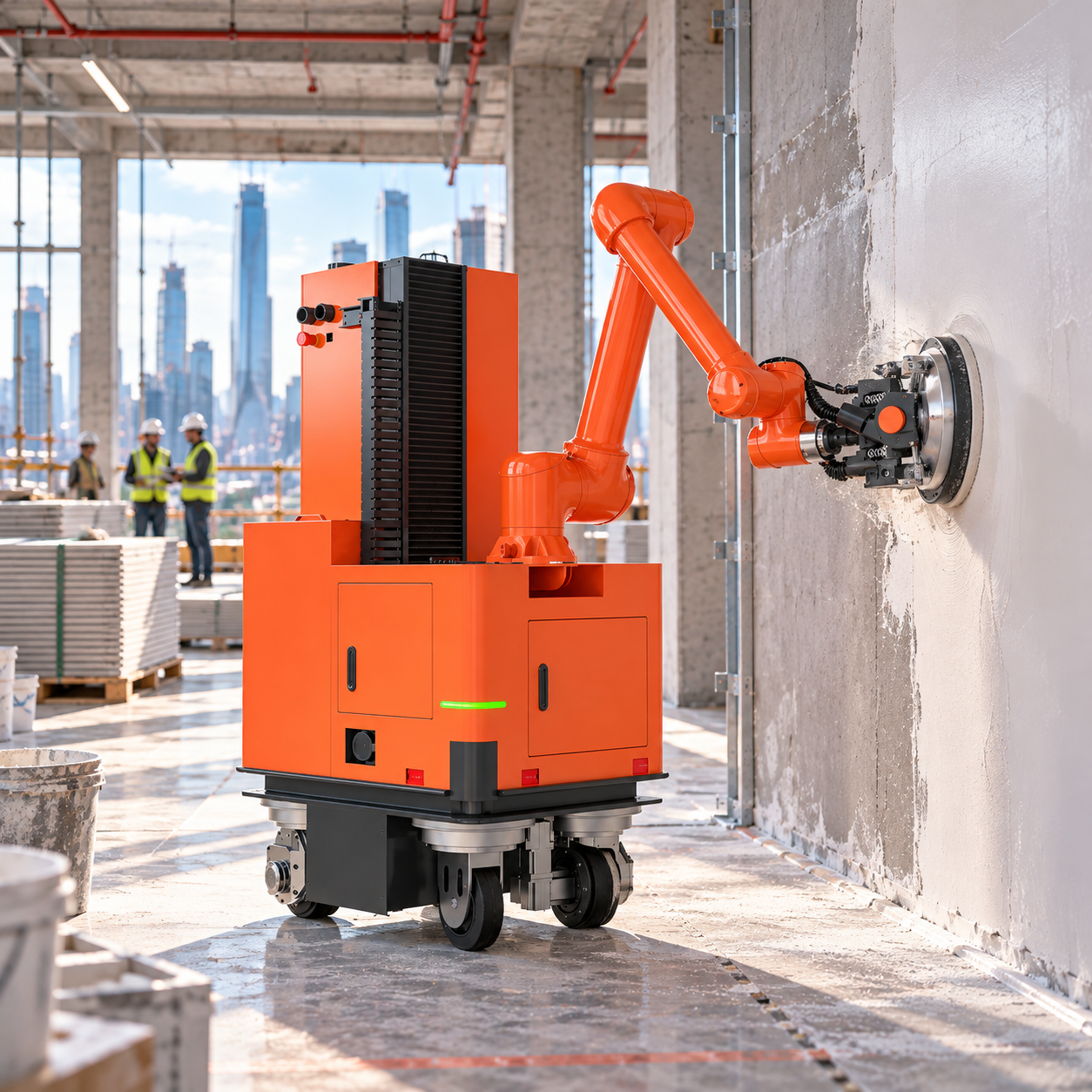
Wall putty spraying, putty leveling, sanding, painting, and plastering often require substantial labor, generate dust, and demand consistent surface quality.
Wall finishing robots are designed to perform one or several of these processes within an integrated system.
When deployed under suitable site conditions, these machines can help minimize quality variations between work areas, reduce rework, and limit workers\' direct exposure to dust and construction materials.
These robots are particularly suitable for buildings with numerous rooms, repetitive wall layouts, and concentrated finishing schedules, such as apartment complexes, hotels, hospitals, factories, and commercial developments.
Wall-Building Robots and Supporting Construction Equipment
Wall-building robots assist with material feeding, positioning, and masonry operations based on predefined data or parameters.
Their primary objective is to improve productivity when constructing wall sections with relatively standardized specifications.
In addition to robots, businesses can adopt specialized equipment such as rebar tying machines, mortar spraying machines, wall plastering machines, and concrete leveling machines.
This approach is suitable for companies seeking to gradually automate individual construction tasks before implementing robotics on a larger scale.
On-Site Measurement and Inspection Robots
On-site measurement provides the foundation for monitoring construction progress, work quantities, and quality.
Measurement robots can collect data directly construction sites, verify positions, and record results in real time.
The collected information enables engineering teams, project managers, and QA/QC departments to identify deviations earlier, reduce manual reporting time, and improve coordination between on-site personnel and office-based teams.
Specialized Infrastructure Robots
Beyond conventional construction sites, robots are also used for underwater inspections, structural surveys, and underground sewer cleaning.
These machines help access areas that are difficult to observe or potentially hazardous to workers.
Images and data collected by the robots can support condition assessments, maintenance planning, and the identification of areas requiring corrective action.
Benefits of Construction Robots for Construction Companies
Improving Productivity in Repetitive Tasks
Robots can consistently perform operations according to established procedures, making them particularly suitable for large-area or highly repetitive tasks.
Companies can then allocate personnel to activities requiring greater experience, supervision, and complex problem-solving.
Actual performance depends on the robot model, site conditions, material supply procedures, and coordination among construction teams. Productivity should therefore be assessed through site surveys and trials on specific projects.
Maintaining Consistent Quality Control
Construction finishing quality is often affected by workers\' skills, physical condition, and working environments.
Robots perform operations according to technical parameters, helping reduce variations between construction areas.
Improved consistency can minimize surface defects, reduce corrective work, and strengthen quality assurance during project acceptance.
Addressing Labor Shortages
Construction robots do not eliminate the roles of workers and engineers. Instead, they change how human resources are allocated on construction sites.
Operators remain responsible for preparing work areas, configuring equipment, supplying materials, supervising operations, and handling unexpected situations.
This operating model can reduce the need for large numbers of workers performing physically demanding, repetitive tasks where consistent quality is difficult to maintain.
Improving Occupational Safety
Certain robots can perform tasks in environments involving dust, chemicals, underwater conditions, confined spaces, or other potential hazards.
Reducing workers\' direct exposure to these environments can help minimize risks. However, robots must still operate according to proper procedures and under the supervision of technically trained personnel.
Optimizing Material Usage and Reducing Rework
When equipment is properly configured and operated, material consumption can be controlled more precisely.
Consistent construction quality also helps reduce corrective work.
These advantages contribute to better construction cost control, less material waste, and more efficient resource utilization.
Enhancing Measurement and Construction Management
Robots integrated with sensors and data platforms enable businesses to record operating information, work quantities, and construction results.
This information can provide a foundation for comparing productivity, evaluating return on investment, and establishing deployment procedures for future projects.
The long-term value of construction robotics therefore extends beyond the equipment itself to the standardization of construction management practices.
Which Businesses Can Benefit Construction Robots?
Construction robots are particularly suitable for:
-
Property developers managing multiple projects or facing demanding schedule and quality requirements.
-
General contractors and design-build contractors.
-
Structural and finishing contractors.
-
Industrial construction companies and factory builders.
-
Developers of urban areas, apartment buildings, hotels, and shopping centers.
-
Infrastructure operation, inspection, and maintenance companies.
-
Project management, QA/QC, and engineering departments seeking standardized construction processes.
However, robotic solutions are not equally suitable for every project.
Investment efficiency must be assessed based on the construction area, degree of task repetition, site conditions, work volume, project schedule, and operational capabilities.
Construction Robotics Solutions Provided by CIC
CIC provides a range of robots and automated equipment for various construction activities, including:
-
Mortar screeding and floor tile installation robots.
-
Concrete leveling, power troweling, and floor finishing robots.
-
Wall putty spraying, sanding, painting, and plastering robots.
-
Wall-building robots.
-
Mobile ground-based rebar tying robots.
-
Real-time on-site measurement robots.
-
Rebar tying machines, mortar sprayers, wall plastering machines, and concrete leveling machines.
-
Underwater inspection robots and underground sewer cleaning robots.
Beyond supplying equipment, CIC assists businesses in evaluating real-world robotic applications.
The implementation process may include needs assessments, site condition analysis, equipment selection, operational demonstrations, user training, and technical support.
This approach helps customers identify which robots are suitable, which construction activities should be prioritized for automation, and whether the expected benefits align with their investment objectives.
Construction Robots: Advancing Mechanization to Smart Construction
The development of construction robotics demonstrates how the industry is gradually moving standalone machinery toward measurable, controllable, and repeatable construction workflows.
Robots are not intended to replace humans entirely.
Their greatest value lies in combining equipment, data, and engineering expertise to improve productivity, maintain quality, and organize construction sites more efficiently.
For construction companies, this is an appropriate time to survey, test, and select tasks with strong automation potential.
Starting with a specific operational challenge enables businesses to accurately evaluate performance before expanding deployment.
What Should Businesses Evaluate Before Investing in Construction Robots?
The effectiveness of construction robots should not be assessed solely based on operating speed.
Before investing, businesses should compare equipment capabilities with actual site conditions and project objectives.
-
Work volume and repetition: Large construction areas, repetitive specifications, and continuous work schedules allow robots to deliver greater efficiency.
-
Site conditions: Access routes, power supplies, material supply areas, and workflow coordination must meet the requirements of individual machines.
-
Quality criteria: Businesses should clearly define requirements for surface flatness, consistency, allowable tolerances, and acceptance procedures.
-
Operating personnel: On-site teams need training in equipment configuration, supervision, material supply, and troubleshooting.
-
Return on investment: Equipment costs should be compared against potential improvements in productivity, labor utilization, material consumption, construction duration, and rework reduction.
-
On-site trials: Demonstrations in representative work areas help determine actual productivity and the ability to integrate robots into existing construction processes.
Request a Consultation on Construction Robotics
Every construction project has different site conditions, material requirements, schedules, and technical standards.
CIC supports businesses in assessing their requirements, selecting suitable robot models, and developing implementation plans tailored to actual project conditions.
Register for Construction Robotics Consultation
CIC Construction Technology and Consultancy Joint Stock Company
- Hotline: 024 3976 1381
- Email: info@cic.com.vn
Register for a consultation, site survey, or robot demonstration to evaluate the potential applications of robotics in your construction project.