Công ty cổ phần công nghệ và tư vấn CIC
Specialized
Home > News > Specialized > GeoSIG – Earthquake Early Warning and Structural Health Monitoring System for High-Speed Railways
Real-Time Landslide Monitoring: Lessons the Sichuan Rescue Operation

What Is a Low Emission Zone? Impacts and What Businesses Need to...
Applications of Artificial Intelligence (AI) in Geoscience
CIC Reviews Business Performance for the First Half of 2026: Proactive Innovation...

ETABS v23.3.0 – Latest 2026 Update Officially Released
Nội dung chính
GeoSIG – Earthquake Early Warning and Structural Health Monitoring System for High-Speed Railways
10/06/2026
Lượt xem 3
1. GeoSIG’s Earthquake Early Warning Philosophy
When an earthquake occurs, energy the epicenter is released in the form of mechanical waves propagating through the ground. Among these, the primary wave, or P-wave, is a longitudinal wave that travels at the highest velocity, has a small acceleration amplitude, and does not cause structural damage. In contrast, the secondary wave, or S-wave, is a transverse wave that travels more slowly but has a larger amplitude and destructive frequency. It is the direct cause of railway trackbed deformation or the collapse of railway infrastructure.
As a reThe core philosophy behind GeoSIG’s solution is to maximize the use of the “golden time window” — the difference in arrival time between the P-wave and the S-wave. By configuring a network of highly sensitive accelerometer stations along the railway line, the system detects and analyzes the P-wave as soon as it reaches the site, instantly calculates the level of hazard, and automatically issues intervention commands, such as train slowdown or emergency stop, through the railway radio communication system transmitted via fiber-optic cables.
sult, the train can be forcibly brought to a complete stop or slowed down to a safe speed range before the destructive wave, the S-wave, reaches the track location.
2. GeoSIG’s Comprehensive Technical Solution
GeoSIG’s overall solution follows a strict layered technical architecture to ensure maximum availability and eliminate processing latency.
2.1. Hardware Components at Seismic Stations
- AC-73 Accelerometer: The AC-73 is a high-end, three-axis force-balance accelerometer. It features an ultra-wide dynamic range of more than 165 dB and an operating bandwidth DC to 200 Hz. This configuration enables the sensor to accurately distinguish P-waves environmental noise while avoiding signal saturation during peak seismic events.
- GMSplus / GMSplus6 Data Recorders: These devices integrate high-resolution 24-bit ADC converters and support continuous real-time data streaming to the control center. They also operate in parallel event-triggered and continuous recording modes.
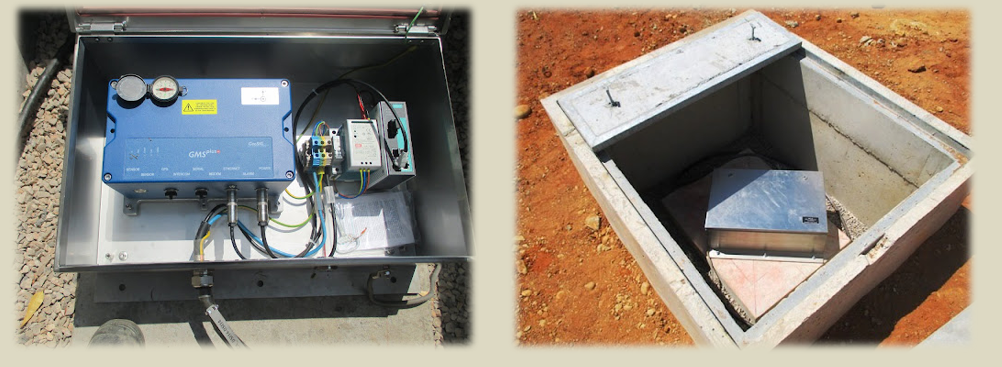
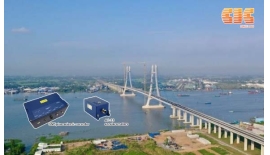
Equipment at seismic stations
2.2. Dual Monitoring Mode
The system allows two monitoring objectives to be configured simultaneously on the same field equipment infrastructure:
- Free-field monitoring: The system directly measures acceleration, velocity, and displacement of natural ground conditions to support the Earthquake Early Warning function.
- Structural monitoring for piers, tracks, and stations: The system measures vibration and deformation at the mid-span of viaduct girders, pier tops, pier bases, structural inclination, and the movement limits of expansion joints to support Structural Health Monitoring.
2.3. Warning Processing Algorithms and Integration with the Train Control System
- High-speed communication network: Digitized data the field is continuously transmitted to the operations center through a fiber-optic network to eliminate transmission latency.
- Cross-checking algorithm: The GeoDAS software at the control center receives field data. When one station exceeds a predefined safety threshold, the software applies voting logic. An alarm command is only issued when at least a predefined number of neighboring stations simultaneously detect the vibration event. This helps completely eliminate false alarms caused by train-induced vibration.
- Closed-loop automatic response system: The control signal is directly connected to the server of the Automatic Train Control System through industrial communication protocols such as ModBUS. The system is pre-programmed with train operation intervention scenarios according to seismic intensity levels:
- Normal OP: No threshold is exceeded; the train continues operating at its design speed.
- System Fault: The system issues a hardware fault or connection loss warning for maintenance purposes.
- Minor Alarm: The primary threshold is exceeded; the system automatically issues a slowdown command.
- Major Alarm: The destructive threshold is exceeded; the system automatically issues an emergency STOP command by cutting off power or activating the train’s emergency braking system.
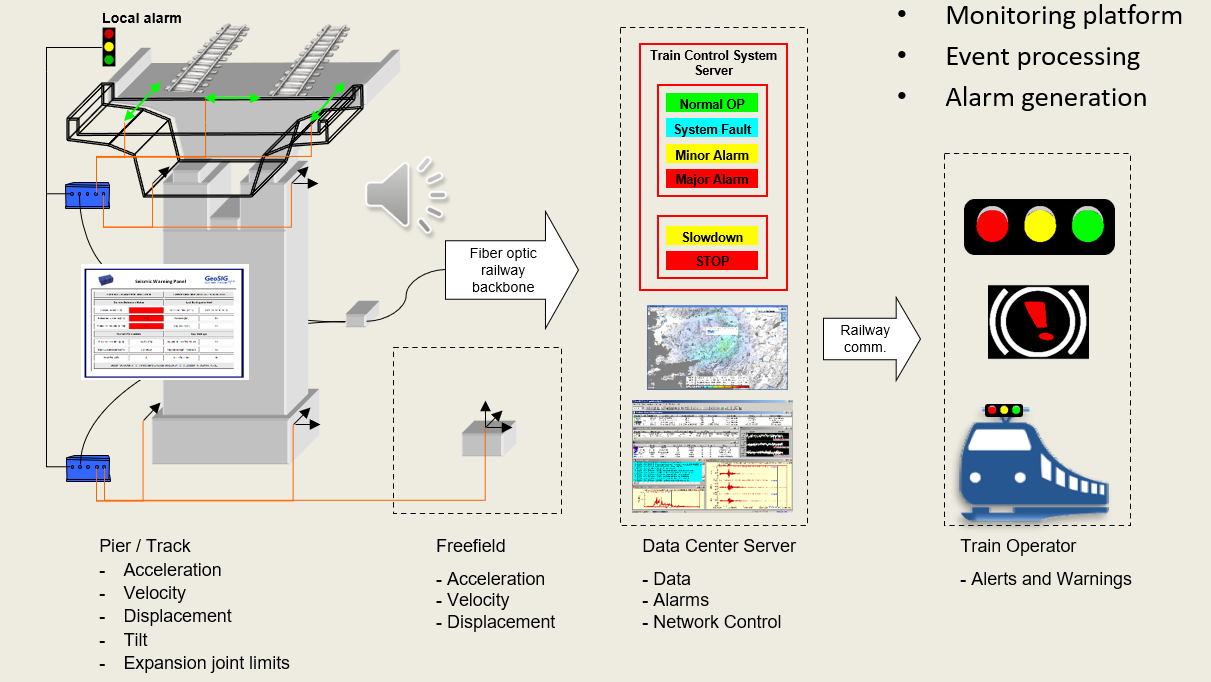
Structural diagram of the earthquake early warning system for high-speed railways
3. Implemented Projects
GeoSIG’s systems have been deployed and proven highly reliable in many large-scale high-speed railway projects around the world.
3.1. Kenitra–Tangier High-Speed Railway, Morocco
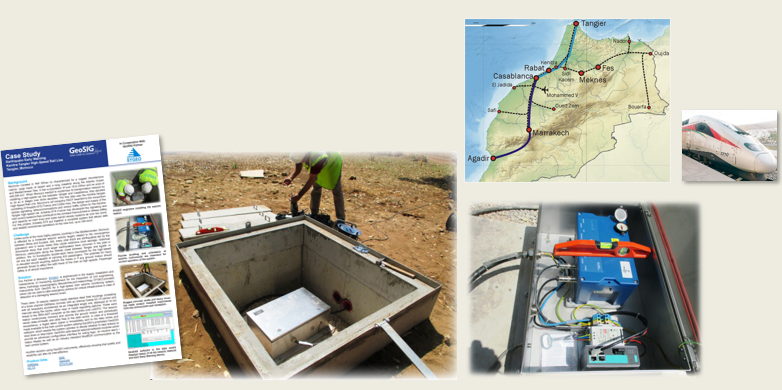
- Background: The project modernized the transport corridor connecting Tangier and Casablanca, with a commercial operating speed of 320 km/h. The line uses heavy-duty double-decker Euroduplex trains with a capacity of 533 passengers, requiring strict safety standards against seismic risks in Northwest Africa.
- Technical solution: GeoSIG worked with a local partner to install a system comprising 18 field seismic stations housed in stainless-steel protective enclosures along the railway line. The stations were evenly distributed at intervals of 10 km and integrated into signaling and technical stations along the route.
- Operational results: The terminal equipment uses GMSplus recorders and AC-73 sensors. When vibration exceeds the threshold, data is transmitted via LAN/fiber optic to the central server. The GeoDAS software performs analysis and sends emergency train stop commands through the ModBUS protocol directly into the signaling and train control system provided by the Ansaldo-STS consortium.
3.2. Honam High-Speed Railway, South Korea
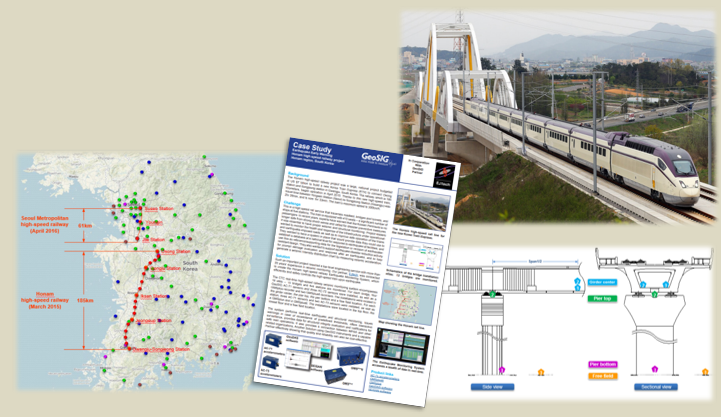
- Background: The 185-km Honam high-speed railway, operated by Korea Train Express (KTX), connects Osong and Gwangju with a design speed of 300 km/h. The line runs through complex infrastructure comprising many major viaducts. The project required train operation safety monitoring in parallel with the development of a national database on structural behavior to optimize seismic-resistant design.
- Technical solution: GeoSIG deployed a comprehensive real-time monitoring network at 18 critical locations, including 13 major bridges and 5 multi-level stations.
- At each bridge: Four AC-71 sensors, three AC-73 sensors, and GMSplus / GMSplus6 recorders were installed to monitor the structure the mid-span of bridge girders, pier tops, and pier bases to the free-field ground environment.
- At each station: AC-71 and AC-73 sensors were installed at roof level, basement level, and in free-field locations.
- Operational results: The system performs continuous dual EEW and SHM monitoring. All data is directly linked to the Ministry of Public Safety and Security of South Korea, automatically generating seismic intensity charts and assessing infrastructure integrity immediately after the vibration event ends.
3.3. LGV Méditerranée High-Speed Railway, France
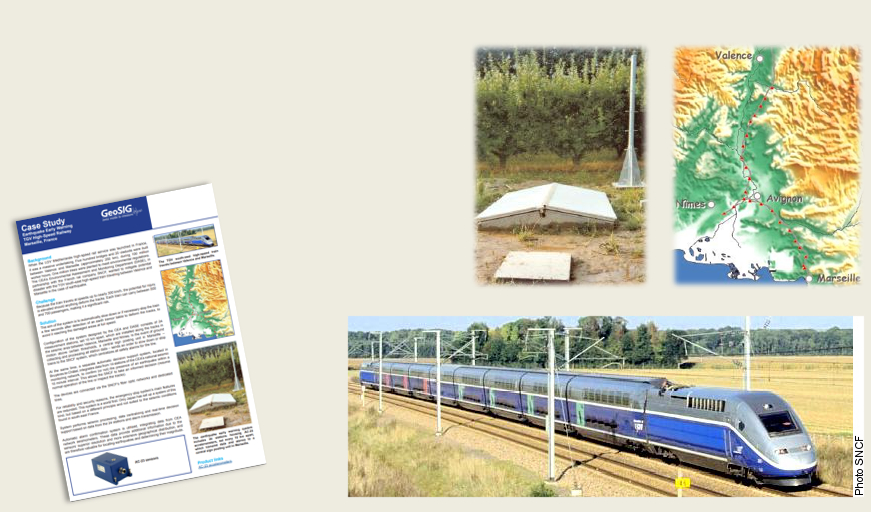
- Background: The 250-km LGV high-speed railway connects Valence and Marseille. Its massive infrastructure includes 500 bridges and 20 engineering viaducts. TGV trains operate at nearly 300 km/h, carrying approximately 500 to 700 passengers per train.
- Technical solution: The project was designed through cooperation between CEA-DASE and the French National Railway Company, SNCF. An emergency stop system comprising 24 measurement stations using AC-23 accelerometers was installed at exact 10-km intervals along the seismic engineering section.
- Operational results: When the sensors detect vibration exceeding the threshold, the warning signal is sent to the SNCF command center in Marseille to automatically issue train braking or slowdown commands. At the same time, an automated decision-support system located in Bruyères-le-Châtel integrates cross-checked data 14 seismic stations belonging to CEA’s national network to verify the event within 10 minutes. This helps SNCF make accurate dispatching decisions, such as allowing trains to resume normal operation or blocking the track for maintenance.
4. Technology Lessons for High-Speed Railway Projects in Vietnam
Based on the in-depth analysis of GeoSIG’s comprehensive solution and real-world case studies, three core technology lessons can be drawn as strategic guidance for implementing Disaster Prevention Systems (DPS) for future high-speed railway, urban railway, and suburban railway networks in Vietnam, such as the Hanoi–Quang Ninh line or the Ben Thanh–Can Gio suburban line.
First, EEW and SHM should be integrated on a single hardware infrastructure.
Instead of simply installing sensors to detect earthquakes, the system should be designed as a multi-purpose platform, similar to the Honam project in South Korea. Sensors should be distributed both in free-field ground locations along the railway line to capture P-waves for early warning and at critical infrastructure points, such as viaduct girder mid-spans, pier tops, pier bases, flood-prone underground tunnel areas, and depots. This enables automatic assessment of structural geometry deformation immediately after a natural disaster while optimizing infrastructure investment costs.
Second, the train operation intervention decision-making process must be fully automated.
Signals field data acquisition units must be transmitted through a high-speed redundant fiber-optic network with a minimum bandwidth of 10 Gb, combined with next-generation dedicated radio technologies such as FRMCS / 5G-R. The system must automatically calculate event validity through cross-checking logic algorithms to completely eliminate false alarms caused by train-induced vibration. The output signal must be configured for direct connection to the server of the automatic train signaling and control system through standard communication protocols. This enables the system to automatically activate braking, reduce train speed, or bring the train to a complete stop without relying on delayed manual responses dispatchers.
Third, field equipment components must be standardized for harsh operating conditions.
All seismic sensors, anemometers, accumulated rainfall gauges, and periodic flood sensors in underground tunnel areas must meet the strictest industrial standards for weather resistance, wide dynamic range, and broad flat bandwidth. They should be installed inside specialized protective enclosures, such as stainless-steel boxes, to eliminate noise and localized damage, ensuring the integrity of input data for the central system.
For more information, please contact:
- Software Solutions and Technology Equipment Center - CIC Technology and Consultancy Joint Stock Company
- Hotline: 0976 268 036 / 024 3974 1373