Công ty cổ phần công nghệ và tư vấn CIC

Construction Robots and Their Practical Value for Modern Construction Sites
KOMPAS-3D V24 Launches with Major Upgrades for Mechanical Design
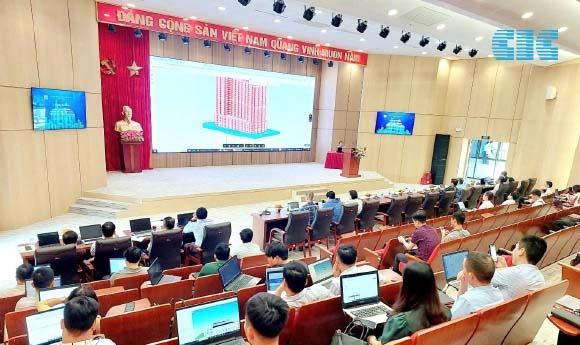
5 Principles for Effective BIM Implementation in Vietnam
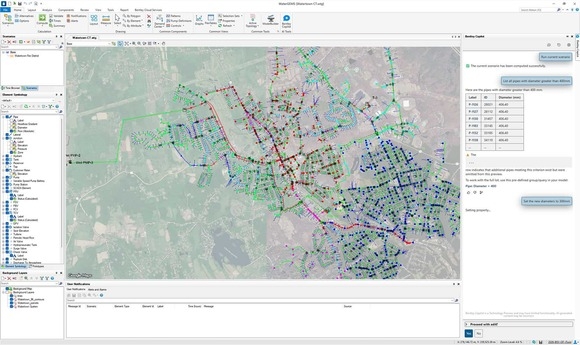
OpenFlows Water & Sewer 2026 – Bentley’s Powerful Software Duo

enjiCAD 2027 Officially Launched with Breakthrough Performance and an Enhanced Design Experience...
Nội dung chính
5 Principles for Effective BIM Implementation in Vietnam
18/09/2026
Lượt xem 0
Five principles for effective BIM implementation in Vietnam include defining the right objectives, standardizing workflows, managing data, and optimizing construction project costs.
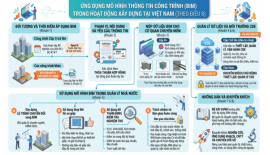
BIM is evolving a technological trend into an established method for managing and delivering construction projects in Vietnam. However, the key question is no longer “Should BIM be implemented?” but rather “How should BIM be implemented to create tangible value for a project?”
In practice, many projects have implemented BIM without achieving results proportionate to the costs and resources invested. The underlying issue often lies not in the software but in the implementation approach: the BIM model is treated as a deliverable rather than a tool that supports decision-making and project management.
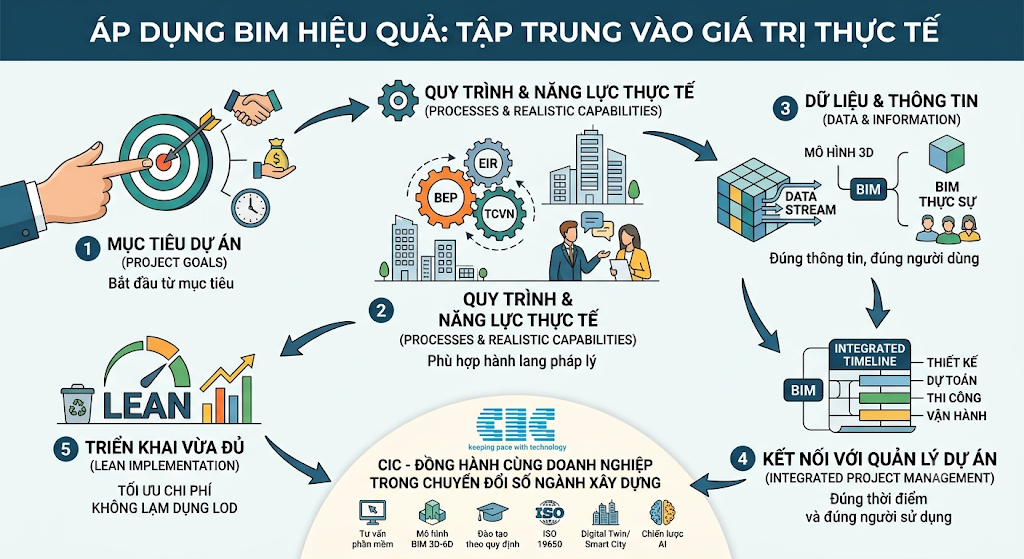
Below are five principles for using BIM to create tangible value for a project.
1. Start with the Project Objectives, Not the Software
One common mistake is to begin BIM implementation by choosing Revit, Tekla, Navisworks, Autodesk Construction Cloud, or a particular Common Data Environment platform. Instead, the first step should be to determine which problems BIM is expected to solve.
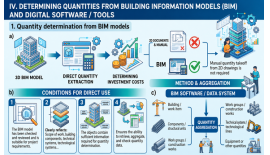
For a project involving coordination among multiple disciplines, the priority may be clash detection and design coordination. For a project that requires tighter cost control, the focus may be quantity takeoff and 5D management. For a facility intended for long-term operation, greater attention should be paid to asset data, Digital Twins, and integration with operation and facility management systems.
In other words, BIM objectives must be derived the project management objectives.
2. Develop a BIM Workflow Suited to Actual Capabilities
Vietnam is gradually completing its legal framework and roadmap for BIM implementation. However, BIM workflows used in other ries or by international companies should not be copied without adaptation.
An effective workflow must balance project requirements, the capabilities of participating parties, the required level of information, and implementation costs.
Documents and requirements such as EIR, BEP, MIDP, TIDP, naming conventions, LOD/LOI, and model-checking procedures only deliver value when they are tailored to the project and consistently followed by all parties.
3. Focus on Data, Not Just Geometry
A visually detailed BIM model that does not contain the required information is not necessarily an effective BIM model.
More importantly, the following questions must be answered:
-
Which objects need to be modeled?
-
What level of geometric detail is sufficient?
-
What information should each object contain?
-
Who will create, verify, and use that information?
-
At which stage of the project will the information be used?
This is the fundamental difference between “3D modeling” and true BIM implementation.
4. BIM Must Be Integrated with Project Management Workflows
BIM is unlikely to create meaningful value if it operates independently design, quantity surveying, QA/QC, construction, and operation management processes.
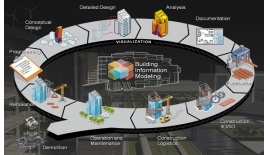
An effective model should support activities such as design reviews, multidisciplinary coordination, quantity takeoff, scheduling, change management, quality control, and ultimately the handover of data for facility operation.
Therefore, the key trend in the coming period will not simply be “BIM modeling” but “BIM-based project information management.”
5. Do Not Implement BIM Beyond What the Project Requires
Not every project requires modeling at the highest level of detail. Requiring an excessively high LOD, too much information, or the modeling of objects that do not support a specific objective can significantly increase costs without generating corresponding value. A practical principle is:
Only request information when its intended use has been clearly defined.
CIC – Supporting Businesses Throughout the BIM Implementation Process
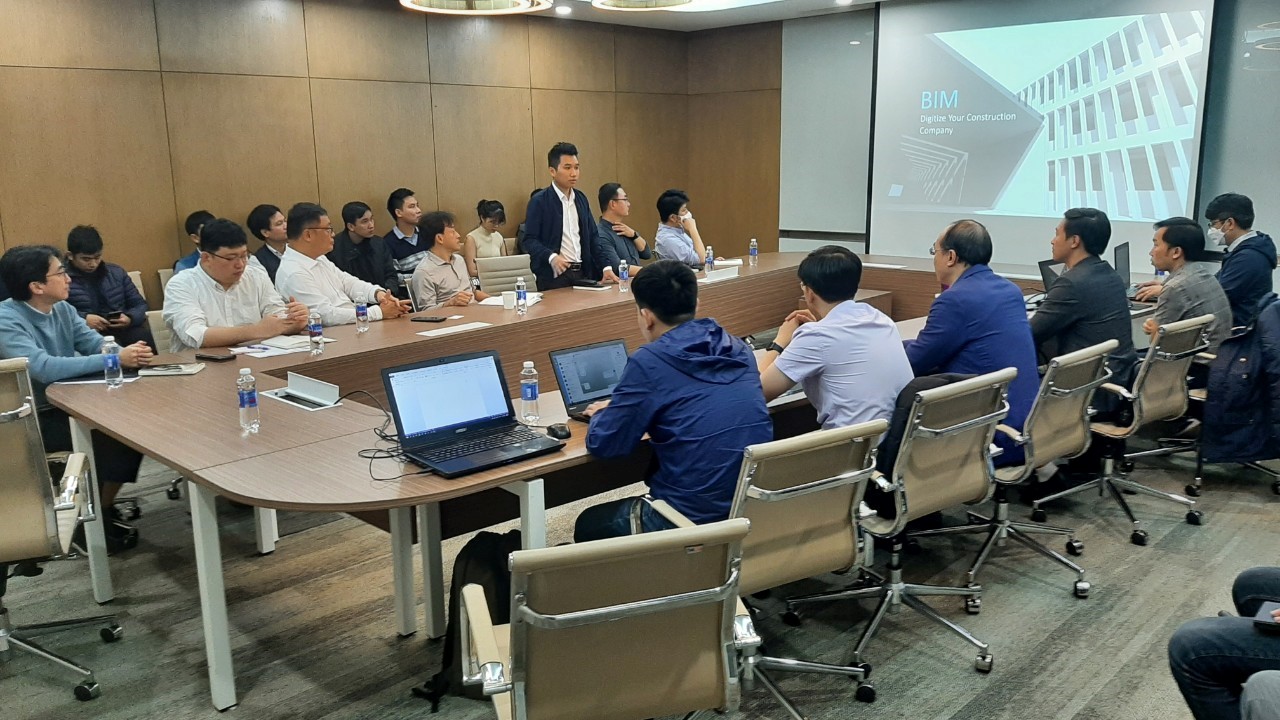
For BIM to create tangible value, businesses need more than software tools. They also need an implementation methodology suited to the specific characteristics of each project and the capabilities of each organization.
With the goal of becoming one of the pioneering organizations in BIM adoption and implementation in Vietnam, CIC Construction Technology and Consultancy Joint Stock Company (CIC) has a team of experienced BIM managers and technical specialists capable of supporting project owners, design consultants, and contractors— strategy development through practical implementation.
CIC provides a wide range of BIM consulting and implementation solutions, including consulting for BIM software such as Revit, Tekla, Allplan, Autodesk Construction Cloud, BIMcollab, Dalux, and Procore; BIM model creation and consulting for 3D, 4D, 5D, and 6D applications; BIM model verification; BIM training in accordance with legal regulations and ISO 19650; and consulting on Digital Twins, Smart Cities, and AI implementation strategies for the construction industry.
More importantly, CIC focuses on understanding each client’s actual needs, accurately assessing their current capabilities, and selecting an appropriately scaled solution instead of applying a rigid BIM workflow to every project. Choosing the right BIM implementation solution helps optimize costs in proportion to the value delivered to the project.
Effective BIM is not about creating the most detailed model. It is about providing the right information at the right time to the right people. This is also how CIC aims to support clients throughout the construction industry’s digital transformation journey.
CIC CONSTRUCTION TECHNOLOGY AND CONSULTANCY JOINT STOCK COMPANY
Head office: VG Building, 235 Nguyen Trai Street, Thanh Xuan District, Hanoi
Email: info@cic.com.vn
Website: www.cic.com.vn
Hotline: 0918 897 418